
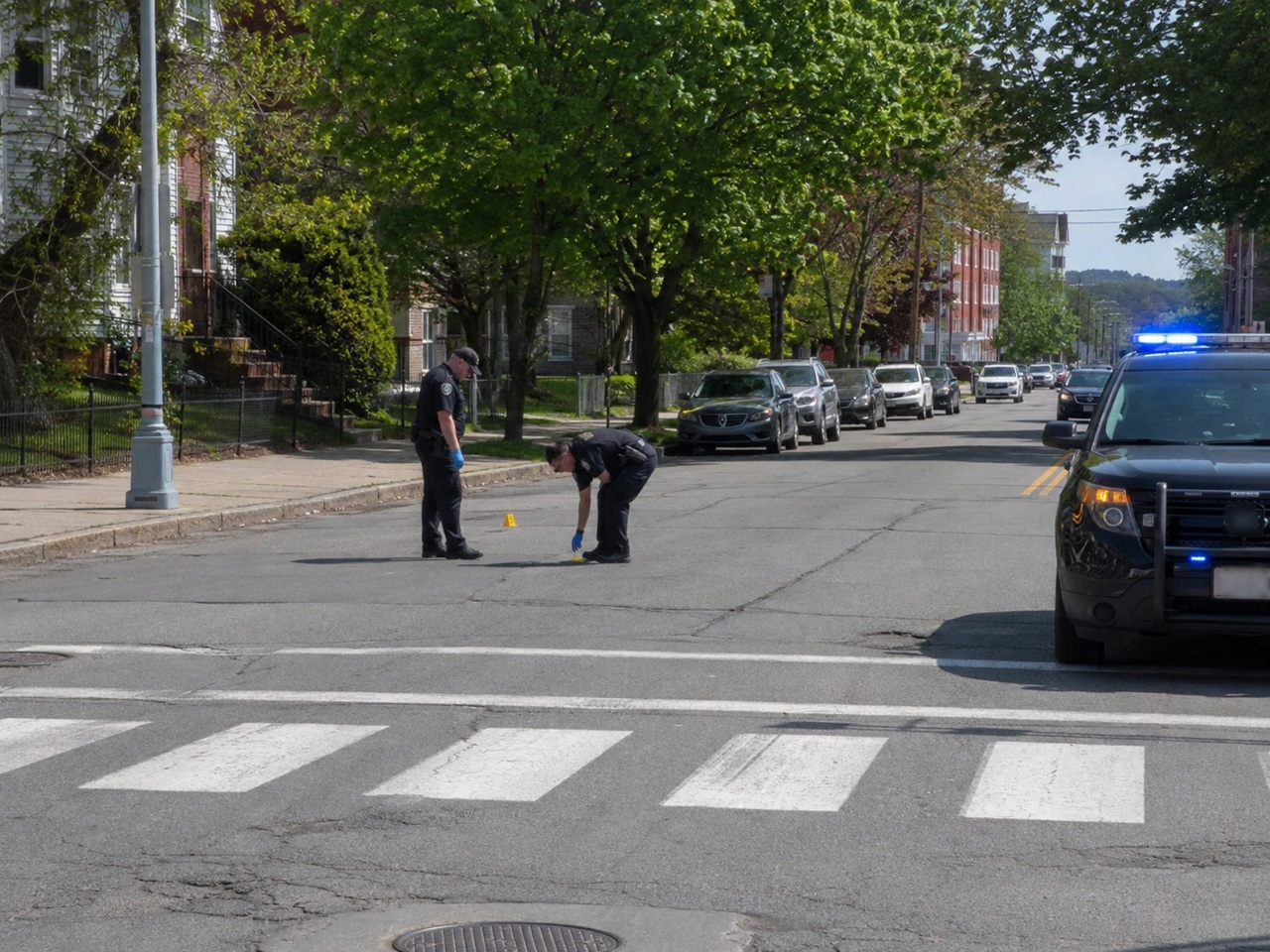
The Driver Can Disappear Without Making Your Right To Compensation Disappear
A pedestrian hit by a car already has enough to deal with. When the driver speeds away instead of stopping, another frightening question gets added almost immediately: who is going to pay the medical bills, lost income, and other losses if nobody can even identify the person who caused the crash?
A Maine pedestrian accident claim doesn't necessarily end because the driver can't be found. Maine insurance law specifically addresses injuries caused by hit-and-run vehicles, and uninsured motorist coverage can become one of the most important sources of compensation.
If police later identify the driver, their liability insurance may become another source of recovery. If the driver is uninsured, or never identified at all, the claim can instead turn on which uninsured motorist policies cover the injured pedestrian and how much coverage is available.
Our attorneys at Jabar LaLiberty, LLC have handled pedestrian hit-and-run cases in which insurance coverage became central to recovery. Finding that coverage can require looking beyond the obvious question of whether the pedestrian personally owned a car.
Maine Insurance Law Specifically Includes Hit-And-Run Vehicles
Maine's uninsured motorist law provides protection for people insured under qualifying auto policies who are legally entitled to recover damages from uninsured or underinsured motor vehicles or from hit-and-run drivers.
That distinction matters. The fact that the fleeing driver can't be identified doesn't automatically prevent a covered person from pursuing an uninsured motorist claim.
Under 24-A M.R.S. § 2902, Maine auto policies generally must include uninsured motorist coverage. For many private-passenger policies, the UM limits must equal the policy's bodily-injury liability limits unless the purchaser expressly chooses lower UM limits in writing.
Even then, the coverage generally can't be reduced below Maine's current minimum bodily-injury limits of $50,000 per person and $100,000 per accident.
That makes uninsured motorist coverage in Maine particularly important when a pedestrian is left with injuries but no identifiable driver to pursue.
The First Question Is Which Auto Policy Actually Covers The Pedestrian
People sometimes hear "your own insurance pays" after a hit-and-run and assume that means every pedestrian automatically has a UM claim.
It's more precise to say that a pedestrian may be able to recover through an auto policy under which they qualify as an insured person.
For someone who owns a vehicle and has a Maine auto policy, that policy is an obvious place to start. But the investigation shouldn't necessarily stop there.
If the injured pedestrian doesn't personally own a car, an attorney may need to review policies issued to a spouse, parent, or another household relative. Whether one of those policies applies depends on the policy's definition of an insured person and the pedestrian's relationship and residency status.
For example, an adult child living permanently with a parent may present a very different coverage question from an adult child who moved out years earlier but still occasionally stays at the family home.
Policy language matters, so someone who doesn't personally own a vehicle shouldn't assume there's no insurance available until the household's policies have been reviewed.
Do Not Assume Every Available Policy Can Be Stacked Together
Another potential source of confusion is "stacking," which generally refers to combining coverage from more than one applicable insurance policy.
Maine cases have allowed recovery involving multiple policies in some circumstances, but Maine law doesn't create an automatic right to simply add every UM limit in the household together.
Insurance policies can contain provisions limiting how multiple coverages interact, and Maine courts have upheld certain anti-stacking provisions.
That means the right question isn't, "How many cars does my family insure?" It's:
- Which policies potentially cover the injured pedestrian?
- How does each policy define an insured person?
- What UM limits appear on each declaration page?
- Are there exclusions that apply?
- Do any provisions limit combining multiple coverages?
- Was any required rejection of higher UM limits properly completed?
A serious pedestrian injury can justify reviewing every potentially applicable policy rather than accepting the first insurer's interpretation of what coverage exists.
Who Pays Depends On Whether The Driver Is Found
| What Happens After The Crash? | Potential Source Of Compensation |
|---|---|
| The driver is identified and insured | The driver's liability insurance can pay damages if the evidence establishes that the driver was legally responsible. |
| The driver is identified but uninsured | Applicable uninsured motorist coverage may become the primary insurance source. |
| The driver is identified but has too little insurance | The driver's liability coverage may pay first, with applicable underinsured motorist coverage potentially addressing additional damages. |
| The driver is never identified | Applicable uninsured motorist coverage can treat the hit-and-run vehicle as an uninsured vehicle for purposes of the injury claim. |
That's why identifying the driver and identifying insurance coverage are related investigations, but they don't have to happen one after the other. Both can begin immediately.
MedPay Is Not The Same Thing As Uninsured Motorist Coverage
Another type of automobile coverage sometimes creates confusion after a pedestrian crash.
Maine generally requires motor vehicle liability policies to include at least $2,000 per person in medical-payments coverage. But the statutory protection applies to medical expenses incurred by the driver and passengers in the insured vehicle.
That means a pedestrian shouldn't assume the vehicle's required MedPay coverage automatically pays their medical bills simply because that vehicle hit them.
A particular insurance policy can provide broader coverage than the statutory minimum, so the contract itself still warrants review. But in a pedestrian hit-and-run claim, uninsured motorist coverage is usually a much more important issue than statutory MedPay.
Health insurance may also pay qualifying medical expenses while the injury claim is pending, subject to the terms of that coverage and potential reimbursement issues. But health insurance doesn't compensate someone for the full range of losses that can be included in a personal injury claim, such as lost earning capacity and pain and suffering.
Finding The Driver Can Still Change The Case
An uninsured motorist claim doesn't mean investigators should stop looking for the hit-and-run driver.
Identifying the vehicle can uncover additional insurance, witnesses, evidence about how the crash happened, and information about why the driver left.
Useful evidence can include:
- Witness Descriptions: Vehicle color, body style, damage, identifying stickers, and even a few license plate characters can narrow the search.
- Traffic and Business Cameras: A nearby store, parking garage, home, or public camera may have captured the vehicle before or after the collision.
- Debris At The Scene: Broken lights, mirrors, trim, or other components may help identify a make and model.
- Paint Transfer: Physical evidence on clothing, personal property, or the crash scene can provide another clue.
- Cellphone Video: Other drivers, pedestrians, or nearby businesses may have recorded something without realizing its importance.
- Crash Report Information: Witness names, road conditions, physical evidence, and an officer's initial observations can provide leads for a follow-up investigation.
A Maine crash report can therefore be an important starting point, but it shouldn't be treated as the entire investigation.
Video Evidence Can Disappear Long Before The Legal Deadline
A business camera that recorded the fleeing car may overwrite its footage within days or weeks. A doorbell camera could do the same. Vehicles get repaired, witnesses become harder to locate, and memories of a partial plate number become less certain.
That's why taking the right steps after a Maine motor vehicle accident matters even when the other driver has already disappeared.
Whenever possible after a serious pedestrian hit-and-run:
- Call police immediately;
- Get emergency medical care;
- Give officers every detail you remember about the vehicle;
- Get contact information for witnesses;
- Photograph the area and any debris;
- Identify nearby cameras;
- Save damaged clothing and personal property;
- Report the collision promptly to potentially applicable insurers; and
- Preserve copies of all medical and insurance records.
An attorney can also contact nearby businesses and property owners before potentially valuable footage is routinely erased.
Maine Law Requires A Driver To Stop After Injuring A Pedestrian
A driver's decision to leave isn't merely an insurance problem.
Under 29-A M.R.S. § 2252, a driver involved in an accident resulting in personal injury or death must immediately stop at the scene or as close as possible and return. The driver also has duties involving identification and reasonable assistance to an injured person.
Failure to comply can constitute a Class D crime. When a person intentionally, knowingly, or recklessly fails to comply, and the crash caused serious bodily injury or death, Maine law provides an aggravated Class C offense.
The criminal case and the pedestrian's compensation claim serve different purposes. A driver can face criminal consequences for fleeing while separately being responsible for the injuries caused by the collision.
And if police never identify the driver, the absence of a criminal prosecution doesn't automatically eliminate an otherwise valid uninsured motorist claim.
Your Own Insurance Company Can Still Dispute The Claim
Filing a UM claim means asking an insurance company with which you or a family member may have a contractual relationship to pay damages caused by someone else.
That doesn't necessarily mean the insurer will simply write a check.
The company may dispute:
- Whether the injured pedestrian qualifies as an insured under the policy;
- Whether the incident actually involved an unidentified vehicle;
- Who caused the crash;
- Whether the pedestrian was partly responsible;
- Whether particular injuries resulted from the collision;
- The amount of lost income or future medical care;
- Which policies apply; or
- How multiple coverages interact.
Those disputes are why dealing with an insurance company after an accident can remain adversarial even when you're making a claim under coverage connected to your own household.
An Insurer May Try To Blame The Pedestrian
Finding the hit-and-run driver isn't the only liability question that can affect compensation.
Maine follows a comparative negligence rule. An insurer could argue that a pedestrian crossed against a signal, entered traffic unexpectedly, wasn't visible, or otherwise contributed to the collision.
Under 14 M.R.S. § 156, a pedestrian's own fault can reduce a recovery. If the pedestrian is found equally at fault, Maine law bars recovery.
That makes physical evidence particularly important in a hit-and-run case. The driver isn't initially there to give a competing account, but insurers can still scrutinize the pedestrian's conduct when deciding whether and how much to pay.
Maine Generally Gives Injury Victims Six Years, But Waiting Can Still Damage The Case
Maine's general limitations statute provides a six-year period for many civil injury actions under 14 M.R.S. § 752, although different deadlines can apply to particular claims and circumstances.
Six years sounds like a long time. A hit-and-run investigation can create a false sense of security.
The practical deadline for surveillance video may be days. The best opportunity to interview witnesses may be weeks. Insurance policies can also contain notice, cooperation, and claim requirements that should be reviewed promptly rather than waiting for the general lawsuit deadline.
Getting an investigation underway early keeps both possibilities open: finding the driver and establishing the insurance claim if the driver remains unidentified.
Our Results Include Two Significant Pedestrian Hit-And-Run Recoveries
Jabar LaLiberty has handled exactly the kind of insurance issues that can arise when a pedestrian is injured, and the responsible driver leaves.
Our case results include a $500,000 settlement for a pedestrian hit in an out-of-state hit-and-run. We negotiated that recovery with the insurance carrier.
We also recovered $400,000 for a Maine pedestrian who was struck by a hit-and-run vehicle in a crosswalk while vacationing out of state.
Those accidents happened outside Maine, so they don't establish what any particular Maine claim is worth or which state's law will govern another collision. Prior results don't guarantee a similar outcome. What they do show is that a driver's disappearance doesn't necessarily eliminate the insurance coverage that can provide a meaningful recovery.
Do Not Assume There Is No One To Pay Just Because The Driver Fled
A pedestrian hit-and-run creates two investigations at once. One looks for the vehicle and driver. The other looks for every insurance policy that could provide compensation if the driver isn't found or doesn't have enough insurance.
Our Maine pedestrian accident lawyers investigate both. We can work to locate video and witnesses, obtain police records, identify potentially applicable auto policies, review UM coverage, challenge attempts to blame the pedestrian, and determine the full value of the injuries and financial losses.
If you or someone in your family was struck by a driver who fled the scene, contact us for a free case consultation. We'll determine what evidence can still be preserved and which insurance coverage may be available rather than assuming the case ends with an unknown license plate.
"Just to give you an idea of the complications, the police report implicated the pedestrian was at fault and the driver did nothing wrong." - Wrongful Death Client, ⭐⭐⭐⭐⭐