
Other Riders, Rental Companies, and Sled Makers Can All Share the Blame, While Landowners Get Special Protection
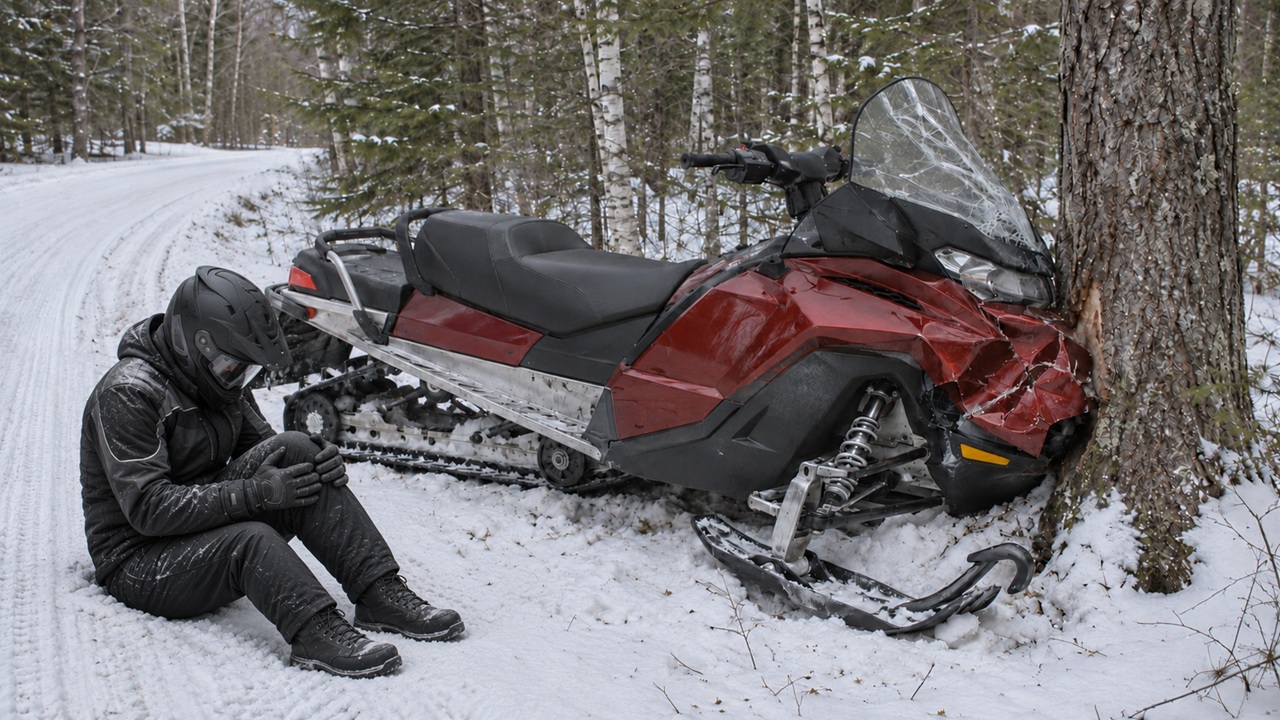
Snowmobile crashes in Maine can cause devastating injuries, from broken bones and spinal cord damage to traumatic brain injuries. Thousands of miles of trails wind through the state, and much of that network crosses private land. Riders move fast with nothing around them but cold air. A single mistake by someone else can change a life in seconds.
When a crash happens, the question of who's responsible isn't always simple. Another rider may be at fault. So might a rental company or a sled manufacturer. In limited cases, the owner of the land the trail crosses can share the blame. Maine law treats each of these possible defendants differently. Some enjoy protections that drivers on the road never get.
Sorting out those rules early can make a real difference in what an injured rider recovers. A Maine personal injury lawyer can identify every party that played a role. That same lawyer can preserve the evidence before snow, weather, and time wipe it away.
|
Who May Be Responsible
|
Maine Snowmobile Rules That Shape Fault
The Maine Department of Inland Fisheries and Wildlife (IFW) sets the rules every rider must follow. Its snowmobile law summary covers registration, trail signs, and where riders can legally go. Every snowmobile must be registered to ride in Maine. Nonresidents with a valid registration from their home state or province can also ride.
Operating under the influence (OUI) applies on a sled just as it does in a car. A rider 21 or older is over the limit at a blood alcohol level of 0.08 percent. Riders under 21 can't have any alcohol in their system. Riders must also obey trail signs and stay off private land without permission, unless they're on a marked trail.
These rules matter in an injury claim because breaking one can be strong evidence of carelessness. The Maine Warden Service investigates snowmobile crashes, and its report often notes speed, impairment, inexperience, and trail conditions. That report can become one of the most important pieces of evidence in the case.
When Another Rider Causes the Crash
Many snowmobile crashes involve two sleds. One rider comes around a blind corner too fast or drifts onto the wrong side of the trail. Another follows too closely in a group. Some crashes involve riders who've been drinking. Others involve riders without the experience to handle a powerful machine on a crowded holiday weekend.
A rider who causes a crash through careless or reckless riding can be held responsible for the injuries. Proving it usually means gathering the warden's report and photos of the trail. Witness statements and damage to both sleds help too. Speed and position on the trail often decide the case.
Insurance can be a challenge in these claims. Snowmobile coverage varies widely, and some riders carry little or none. A homeowner's policy, an umbrella policy, or the injured rider's own coverage may come into play. Tracking down every available source of payment is one of the first things a lawyer should do.
Can a Landowner or Snowmobile Club Be Held Responsible?
Usually not, though there are exceptions. Maine's recreational use statute says landowners don't owe a duty to keep their land safe for snowmobiling. They also don't have to warn riders about hazards. Its protection extends to clubs and other groups that build or maintain trails for public use.
The protection has limits. It doesn't apply to a willful or malicious failure to guard or warn against a dangerous condition. It also may not apply when a rider paid for permission to use the land. The law carves out certain payments from that exception. Each exception depends heavily on the facts, and proving one takes careful investigation.
These cases carry a real risk that injured riders should understand. The statute requires a court to award legal costs and attorneys' fees to a landowner found not responsible under the law. That's why a claim against a landowner or club needs careful review first. A lawyer can weigh whether an exception truly applies before anything is filed.
When a Rental or Tour Company Shares the Blame
Snowmobile rentals and guided tours bring many first-time riders to Maine's trails. Outfitters have a responsibility to provide safe, well-maintained machines and to prepare riders for the conditions ahead. When they cut corners, they can be held responsible for the injuries that follow.
Problems can include sleds with worn brakes or faulty throttles and skipped or rushed safety briefings. Some outfitters rent to riders who are clearly impaired or inexperienced. Guides who lead groups too fast or onto unsafe terrain can also create danger. Maintenance records and the company's own policies often reveal what went wrong.
Most outfitters ask riders to sign a waiver before heading out. A signed release doesn't automatically end a claim, though. Maine courts read these documents closely. A release generally has to clearly spell out that it covers the company's own negligence. A lawyer can review the exact wording to see whether it holds up.
When a Defective Sled Causes the Crash
Sometimes the machine itself is the problem. A throttle that sticks open or brakes that fail can send a sled out of control with no warning. So can a steering or track defect. Under Maine's product liability law, manufacturers and sellers can be held responsible for defective products that cause injuries.
Recalls can offer important clues. The U.S. Consumer Product Safety Commission (CPSC) posts snowmobile recalls for problems like throttle and fuel system defects. A recall doesn't prove a defect caused a specific crash. It can, however, point investigators in the right direction.
The sled itself is the most important evidence in a defect case. Repairing, selling, or scrapping it can destroy the proof needed to hold a manufacturer accountable. After a crash that may involve a defect, keep the machine exactly as it is. Talk with a lawyer before anyone touches it.
Who May Be Responsible and How
Each possible defendant in a snowmobile crash faces a different legal standard. Here's how responsibility can break down depending on who played a role.
| Party | How They May Be Responsible | Key Evidence |
|---|---|---|
| Another Rider | Speeding, impairment, or careless riding | Warden's report, witness statements, sled damage |
| Rental or Tour Company | Poor maintenance, weak training, or reckless guiding | Maintenance logs, the waiver, company policies |
| Manufacturer | A defective design or manufacturing flaw | The sled itself, recall notices, expert inspection |
| Landowner or Club | Only in limited cases, like a willful failure to warn | Proof of known hazards and any payment for access |
Many crashes involve more than one of these parties at once. A rental sled with worn brakes might collide with a rider who was going too fast, for example. Identifying every responsible party gives an injured rider the best chance at full compensation. That work starts with a prompt investigation.
How Maine's Comparative Fault Rule Affects a Claim
Maine follows a modified comparative negligence rule under Maine's comparative negligence law. An injured person who shares some of the blame can still recover money. The jury reduces the award by an amount it considers fair, based on that person's share of responsibility.
There's an important cutoff, though. Suppose the jury finds the injured person was equally or more at fault than the other side. In that case, the person recovers nothing. In a close case, that line can decide whether a rider receives meaningful compensation or none at all.
Insurance companies know this, and they work hard to shift blame onto injured riders. They may point to speed, inexperience, or riding conditions to push the rider's share higher. A lawyer can counter those arguments with the evidence. That keeps the focus on the person or company that actually caused the crash.
Steps to Take After a Snowmobile Crash
The hours and days after a crash shape what can be proven later. These steps help protect both health and a potential claim.
- Get Medical Care – Some injuries, like brain trauma and internal bleeding, don't show symptoms right away, and medical records document the harm.
- Make Sure the Crash Is Reported – The Maine Warden Service investigates snowmobile crashes, and its report becomes key evidence.
- Photograph the Scene – Pictures of the trail, signs, lighting, and both sleds capture details that weather can erase within hours.
- Collect Witness Information – Names and phone numbers of other riders and anyone who stopped to help can be hard to find later.
- Preserve the Sled and Gear – Keep the snowmobile, helmet, and clothing as they are, especially if a defect may be involved.
- Avoid the Other Side's Insurance Company – Don't give statements or sign anything, and send all contact to a lawyer.
Maine generally allows six years to file an injury lawsuit, but waiting is risky. Tracks fade, witnesses scatter, and sleds get repaired or sold. Wrongful death claims have a much shorter deadline. Talking with a lawyer soon after a crash keeps every option open while the evidence is still fresh.
Mainers Helping Mainers After Serious Injuries
Jabar LaLiberty, LLC has represented injured people across Maine since 1979. We're a family firm rooted in Waterville and Portland, and we've recovered over $100 million for our clients. Insurance companies know we never back down, and other firms refer cases to us because clients are in good hands.
When you work with our firm, you get personal attention from an experienced attorney, not a case manager. We investigate every detail, from the warden's report to the condition of the sled. We return calls promptly and keep you updated at every step.
Hurt on Maine's snowmobile trails? Talk with a lawyer Mainers trust about who should be held responsible.
"He didn’t just settle for what was offered and we got what was fair. So, my wife and I are very satisfied with the outcome." - Chad A., ⭐⭐⭐⭐⭐